Antennas
This appendix lists the antennas that FORT recommends for each wireless communication method, identifies which devices need an antenna as a separate accessory, and gives the rules you must follow when using an approved antenna.
FORT offers a variety of antenna options to support the wireless communication method you will be using. The antennas for the NSC Pro and EPC are accessories that you need to select prior to purchase. The antennas for the Safe Remote Control Pro and WES Pro are built into the device, thus select the device version that contains the radio you intend to use.
This appendix provides a list of FORT recommended antennas, but you may use use your own antenna if you so choose. Be certain that it meets the standards for antennas listed in Notifications and Certifications.
In a configuration where every device communicates over LRBLE — for example a Two-to-One over Long-Range Bluetooth — each device needs an antenna suited to that radio. The SRC Pro's antenna is built in; the antennas for both the EPC sender and the EPC receiver are accessories you must select and attach. Range depends on both ends of a link, so an under-specified or poorly placed antenna on the EPC sender limits how far a supervisor can be from the machine and still stop it.
Choose an antenna based on the wireless communication type you plan to use as shown in the following table (Usage row):
| Antenna | 275-0108 | 275-0096 | 275-0112 | 275-0120; | 275-0112 |
|---|---|---|---|---|---|
| Attribute |
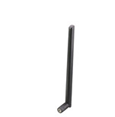
|
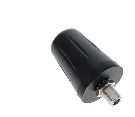
|
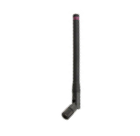
|
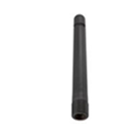
|
|
| FORT Device | EPC 1001, SRC Pro 1001 | EPC 1000, EPC 1003 | SRC Pro 1003 | WES Pro 1003 | NSC Pro 1003 |
| Antenna Type | Whip, Tilt/Swivel | Dome | Whip, Tilt, Swivel | Whip, Straight | Whip, Tilt, Swivel |
| Monopole or Dipole | Dipole | Dipole | Dipole | Dipole | Dipole |
| Termination/Connector | RP-SMA Male Connector | N Type Female Panel | RP-SMA Connector | RP-SMA Male Connector | RP-SMA Connector |
| Usage | ISM 915 MHz LPWA | Wi-Fi, BLE, Long range BLE (EPC 1003 only) | Long range BLE (SRC Pro 1003 only) | Long Range BLE (WES Pro 1003 only) | Long Range BLE (NSC Pro 1003 only) |
| Frequency Range | 902–930 MHz | 2.4-2.5GHz 5.1 to 5.9GHz | 2.3–2.6 GHz | 2.4–2.5 GHz | 2.3–2.6 GHz |
| Peak Gain | 2.7 dBi | 4.5dBi @ 5.1-5.9Ghz 7.2dBi @ 2.4-2.5Ghz | 3.2 dBi | 2 dBi | 3.2 dBi |
Use grommets when routing the antenna cable through enclosures.
If your device has an ISM radio, you must attach an antenna. Operating an ISM radio without an antenna installed could damage the unit.
Ideally, you should place the antenna such that is has a clear line of sight (LOS), it’s not too high or too low, no metal is between it and the sender, and it’s pointed straight up (whip antenna), or pointed towards other devices (puck antenna) The following table shows rules for using approved antennas in the USA, Canada, and Europe:
| Device | FCC ID (US) | IC (Canada) | CE (Europe) |
|---|---|---|---|
| EPC & SRC Pro | CFR title 47, part 15, subpart C, section 15.247 | RSS-247, Issue 2 RSS-Gen Issue 5 | EN 301 489-1 & -3 EN 300 220 RED 2014/53/EU |